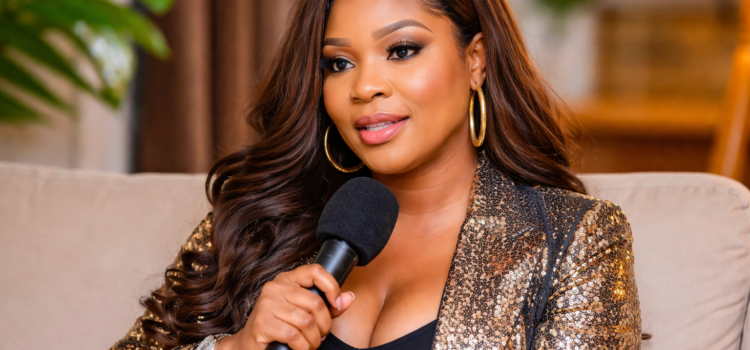
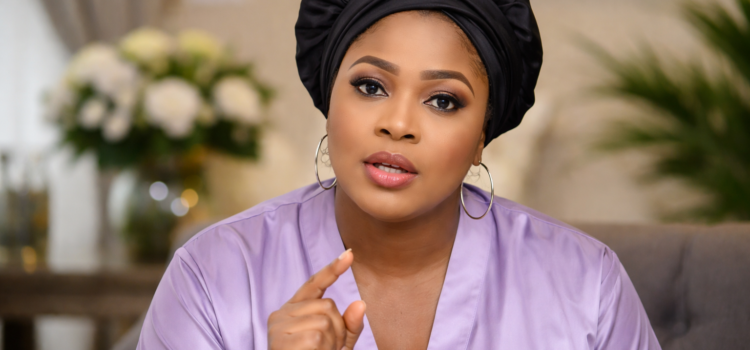
Laide Bakare has opened up about her personal life, sharing how she now handles relationships and protects her privacy.

The Nollywood actress and producer spoke during an interview on the *Real Life With Aunty Ayo* podcast hosted by Ayo Adesanya. In the conversation, she explained why she has become more careful with her emotions and personal space.

Laide said she no longer falls in love easily and prefers to take her time before getting deeply involved. She made it clear that she draws a strong line when it comes to her home and family.

“I do not love easily; I like,” she said. “My home is my private space. I don’t believe in bringing every man I’m seeing into my house. It’s about respect for my space and my kids.”

According to her, her home is a safe place for her children, and she is careful about who she allows into that environment.

The actress also spoke about marriage and her openness to future relationships. She said she would not mind getting married more than once if things do not work out.

She explained that she could get married up to five times, but noted that her religion does not allow a woman to have multiple husbands at the same time.

Laide Bakare’s comments have sparked conversations online, as many reflect on her views about love, privacy, and marriage.

Her message is clear. She values her space, her children, and her peace of mind. For now, she is choosing to approach relationships carefully while staying open to what the future may bring.

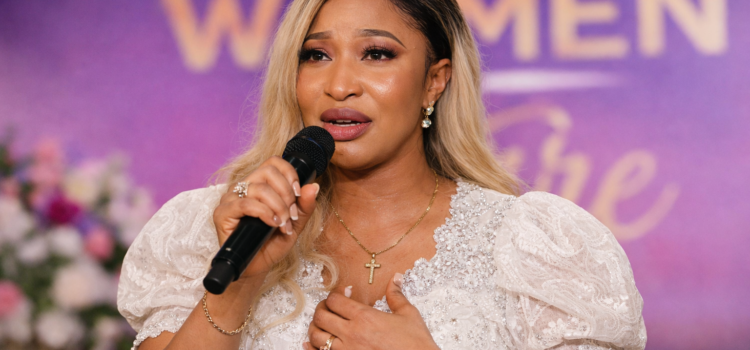
Nollywood actress Tonto Dikeh has shared a deeply personal story about her past, speaking openly about how her life changed through her faith. She spoke at the 2026 Women of Fire Prayer conference in Tanzania, where she told attendees about her struggles and her journey to a new path.

The 40-year-old actress said she once lived in what she described as a dark and troubled space. She explained that during that time, she was involved in activities she now regrets, including joining cult groups and living a life she considers far from God.

Reflecting on those years, she said, “In the midst of trying to navigate life. I have put my hands in so much dirt, so many filthy things. I have joined cults, operated and worked for the demons so hard.”

Dikeh told the audience that her life changed after what she described as a powerful encounter with God. According to her, that moment marked a turning point that pulled her away from her past.

“He dragged me out of hell,” she declared.

She encouraged others who may feel lost or uncertain about their faith, saying, “If you have ever doubted God, just look at me. He does not care about what you have been through or what you have done.”

The actress also spoke about the difference between her past and her present life. She described how she moved from addiction and negative influences to a life centered on faith and prayer.

“From a drug addict to an altar that praises God. From a devil worshipper to a woman who will pray to God with fire.”

Dikeh has been open in recent times about leaving behind habits such as sexual immorality, anger, masturbation, and addiction. She has also become more active in Christian ministry, recently leading a deliverance session for a schoolgirl that gained attention online.

Tonto Dikeh’s testimony highlights her personal journey from a troubled past to a life shaped by faith. Her story continues to draw attention as she shares her experiences and speaks about transformation. Many will be watching to see how she continues her work in ministry and public life.

Nollywood actress Lilian Afegbai has voiced her frustration after she was left out of the nominations for the 2026 edition of the Africa Magic Viewers Choice Awards. The awards organisers recently released the nominee list for the 12th edition, sparking reactions from fans and industry figures.

Afegbai, who starred in the series *To Kill A Monkey*, did not make the nomination list. However, her co-star Bimbo Akintola was recognised with a nomination for Best Lead Actress.

Reacting to the development, Afegbai questioned the decision and highlighted her role as Idia in the series. She argued that her character stood out and gained strong attention from viewers.

Taking to her X account, the actress shared her thoughts on the snub.

“AMVCA smh. I always choose to believe everything happens for a reason.

“I don’t need a nomination for validation. The truth is clear: Nobody trended like Idia from TKAM last year. Her acting was 100. You guys can eat your award.”

Despite her disappointment, Afegbai maintained that she does not rely on award nominations for recognition, even as she expressed confidence in her performance.

The Africa Magic Viewers Choice Awards remains one of the most prominent award platforms in African entertainment, often drawing attention each year for its nominations and winners.

Lilian Afegbai’s reaction adds to the growing conversation around the 2026 AMVCA nominations. While the awards continue to celebrate top talents in the industry, debates over who makes the list are likely to continue as the event approaches.

Veteran Nollywood actress Opeyemi Aiyeola has called on her colleagues to reflect on their political choices, especially their support for the ruling All Progressives Congress (APC), as insecurity continues to rise across the country.

In a video shared online, the actress spoke about the need for people in the entertainment industry to put conscience before personal gain. Her message comes after reports of a terrorist attack on Christians during Palm Sunday in Jos, Plateau State.

Aiyeola expressed concern that the incident did not receive as much public attention as expected. She linked this to the ongoing political climate, urging Nigerians, especially those with influence, to speak up.

She said, “We woke up to another news of terrorist attack in Jos. But unfortunately, it is not trending as usual. It is another political season and I would like Nigerians on ground and those with voices on social media to search through their consciences and do the right thing.”

The actress also addressed her colleagues directly, warning against allowing wealth or status to influence their decisions.

“My colleagues, everything shouldn’t be about money, influence and affluence. Let us allow our conscience to lead us and do the right thing. My wonderful colleagues, I’m not throwing a shade at anybody and nobody can tell you how to swing politically but you should think of your generation’s future.”

Her remarks highlight growing concerns among public figures about the state of security in Nigeria and the role of influential voices during politically sensitive periods.

Aiyeola’s message adds to the ongoing conversation about responsibility and accountability among public figures in Nigeria. As political activities continue, her call serves as a reminder for individuals to weigh their decisions carefully and consider the broader impact on society.

Nigerian actress and reality star Bisola Aiyeola has opened up about the emotional struggles she faced when she became a single mother. Speaking in an interview with Tope Olowoni, she shared how the experience affected her mentally and emotionally at the time.

Aiyeola said she felt deep fear and shame when she found out she was pregnant outside of marriage. She explained that her reaction was shaped by her family background, as her own mother was also a single parent. This made her worry that the same pattern might repeat itself in her daughter’s life.

At the time, she was engaged, but the relationship did not lead to marriage. This added to her concerns about the future and how she would handle motherhood alone. She described the pregnancy as “so shameful,” pointing to both societal expectations and her personal fears.

The actress also faced financial pressure, which made the situation harder. She said adjusting to motherhood was not easy, especially as she struggled with breastfeeding and accepting her new reality. The early days, she noted, were overwhelming.

Despite these challenges, Aiyeola said she slowly began to accept her situation. Over time, she found strength in raising her daughter and started to see the experience in a more positive light.

Now at 40, she reflects on that period as a turning point in her life. She said the journey helped her grow and deepened the bond she shares with her child.

Bisola Aiyeola’s story highlights the emotional weight many people carry in silence. While her journey into single motherhood began with fear and uncertainty, it eventually became a source of strength and growth. Her experience shows that difficult beginnings can lead to meaningful personal change.

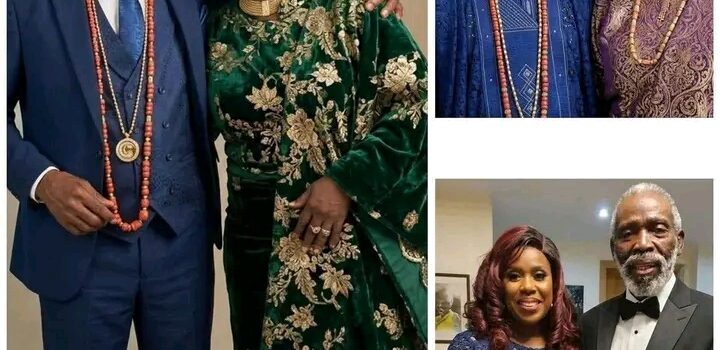
Veteran Nollywood actress Joke Silva has shared the story of how she met her husband, Olu Jacobs, many years ago. According to her, their first meeting happened on a movie set, but it was not love at first sight for her.

Silva spoke about their love story during an appearance on TVC’s ‘Your View’. She explained that while many people were excited about Jacobs’ arrival on set, she did not fully understand who he was at the time.

“Yes, we met on stage, and when we met on a movie set, everybody knew the great Olu Jacobs was coming, except me. When he came, we got on very well, and I discovered his age only after we started dating because he looked so good. For him, it was love at first sight, but for me, it wasn’t,” she said.

The actress said they connected easily and built their relationship over time. She later discovered that Jacobs was older than she thought, but that did not stand in the way of their growing bond.

Their marriage has lasted for decades and has produced two children. Silva said one of the reasons their union has endured is her husband’s understanding nature.

“This older man allows you to get away with a lot of things”, she said.

Silva and Jacobs got married in 1985. At the time, she was 24 years old, while he was 44. Over the years, they have become one of Nollywood’s most respected couples.

Joke Silva’s story shows that lasting love does not always begin with instant attraction. What started as a simple meeting on a movie set grew into a strong marriage that has stood the test of time.

Their journey continues to inspire many fans who admire their commitment and long standing partnership.

Nollywood has stepped into a new chapter. For the first time in its history, Nigerian films are crossing the billion-naira mark at the box office. What was once an industry known for home videos is now producing cinema blockbusters that pull huge crowds and record massive ticket sales.

The turning point came in January 2024 when Funke Akindele announced that her film, “A Tribe Called Judah,” had earned over N1 billion in Nigerian cinemas. The news sparked celebration across social media. Fans praised her achievement and many called it a proud moment for the industry.

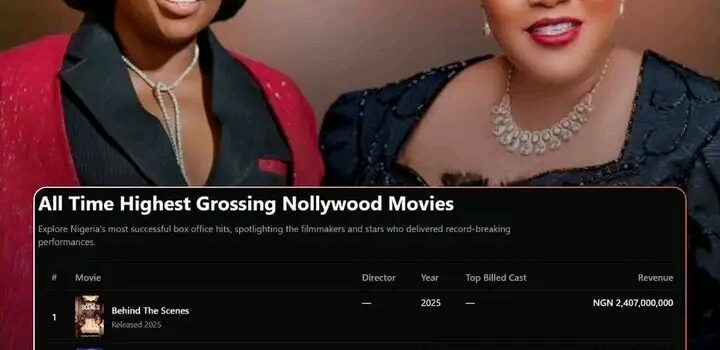
By the end of its cinema run, “A Tribe Called Judah” reportedly made more than N1.06 billion. Not long after, Akindele returned with “Everybody Loves Jennifer,” which raised the bar again by earning N1.8 billion. In January 2026, she pushed the record further with “Behind The Scenes,” which reportedly generated N2 billion within two months.

Her success did more than boost her personal profile. It raised the ambitions of other filmmakers. Actress and producer Toyin Abraham followed with “Oversabi Aunty,” which grossed N863.2 million in just one month, placing it among the highest-earning Nigerian films in West Africa.

Other titles have also delivered strong results. These include “The Wedding Party,” “Chief Daddy,” “King of Thieves,” “Brotherhood,” “Merry Men,” “A Trip to Jamaica,” “Jagun Jagun,” “To Kill a Monkey,” “King of Boys,” “My Mother is a Witch,” and “Omo Ghetto: The Saga.” Together, they show how far Nollywood has come in commercial terms.

Still, the big numbers have sparked debate. Some observers question whether box office figures reflect true profit or simply serve as strong marketing tools in a competitive market. As more money flows into cinema releases, calls for transparency and proper reporting have grown louder.

From Mobile Screens to Modern Cinemas

Nollywood’s journey did not happen overnight. While many trace the industry’s rise to the video boom of the early 1990s, cinema culture in Nigeria goes back much further.

In the 1920s, colonial filmmakers screened motion pictures for local audiences using mobile cinemas that traveled from town to town. By the late 1930s and 1940s, Lagos had become a cinema hub with popular venues such as Rex, Regal, Royal, Capitol, Odeon, and Glover Hall. These locations built a culture of watching films in public spaces long before Nollywood became a global brand.

Today, cinema releases are the clearest sign of commercial success. Higher ticket prices and strong marketing campaigns have helped create blockbuster fandoms. The shift from small video productions to billion-naira cinema hits shows how Nigerian filmmaking has evolved.

The Money Behind the Numbers

While billion-naira figures grab headlines, they do not tell the full story. Box office revenue is shared among cinema owners, distributors, and producers. The final amount that reaches a producer depends on agreements made before release.

Filmmaker and actress Efe Irele explained that gross earnings should not be confused with profit. “High grosses show that people loved the film and kept coming to watch,” he said. “But it’s important to remember that the gross isn’t what producers take home. It is a measure of audience engagement. Some people watch multiple times. Some buy entire rows of tickets for staff or friends. These figures indicate that Nollywood is breaking barriers and is worth investing in.”

He further described how earnings are divided. “In Nigeria, cinema revenue is layered. Cinemas typically take a percentage of ticket sales, and distributors also take their cut for handling logistics and marketing. What remains after these deductions is the producer’s net revenue. The exact split depends on pre-agreed terms, and you need a competent team to manage this. Marketing can make or break a film. You can have an amazing story, but if no one knows about it, people won’t come. Smart promotion turns curiosity into ticket sales. Just look at what Toyin Abraham and I achieved with Oversabi Aunty.”

On the issue of trust and accountability, he added, “Clear reporting, digital tracking, and open communication between cinemas, distributors, and producers build trust. When everyone sees the numbers, filmmakers can make smarter decisions and investors feel confident.”

Filmmaker Biodun Stephen also weighed in. “The billion-naira conversation is inspiring, but it is incomplete. It shows what Nollywood can achieve. Yet, we need to understand the business structure. Sometimes cinemas make more, but creators also earn from streaming platforms like YouTube. That side of revenue is rarely discussed.”

From the cinema side, Filmhouse Group says there are systems in place to ensure accuracy. Winifred Wessels, Head of Marketing at the company, explained how revenue is tracked. “Every transaction, online or at the box office, is recorded in real-time, giving immediate visibility into admissions and revenue. Beyond internal systems, the industry relies on Comscore, a global media measurement platform. It aggregates data from participating cinemas nationwide, offering transparency and consistency in box office reporting. Publicly reported figures are typically drawn from Comscore, the most widely accepted source in Nigeria.”

Dr Shaibu Huseini, Director General of the Nigeria Film and Video Censors Board, also confirmed the credibility of the figures. “The figures correspond with actual admissions, and ticket prices—N7,000 at the time of release—validate the revenue claims. We rely on Comscore as the official source and carry out occasional checks to verify reports from cinemas,” he said.

Despite these systems, some filmmakers admit they do not always know the exact percentage that reaches them. In some cases, distributors and legal teams handle financial details, leaving producers to focus on recovering their investments.

Nollywood’s journey to billion-naira box office success marks a major shift in the industry’s history. From mobile cinemas in the early 1900s to modern multiplex releases, Nigerian filmmaking has grown into a powerful commercial force.

While debates about profit sharing and transparency continue, one thing is clear. Nollywood has entered a new era where ambition, strategy, and creativity are driving record-breaking results. As the industry evolves, attention will likely turn to stronger reporting systems and new revenue streams that shape its future.

Nollywood actor Ray Emodi has revealed that he is stepping away from acting to focus on building a music career. The actor shared the news during a recent interview, saying his next chapter will be centered on making music for the dance floor.

Emodi, who has featured in several Nigerian films, said the decision did not come lightly. He thanked his supporters in the movie industry but explained that music has now taken a stronger place in his heart.

“I love every Nollywood fan, but I’m going to make music for the dance floor. We’re working on my EP. However, my family doesn’t support,” he said candidly.

Over the years, Emodi has earned praise for his performances and has grown into one of the industry’s promising actors. His choice to leave acting marks a major shift in his career.

Despite not having the backing of his family, he made it clear that he is determined to follow his passion. He said his focus will be on creating songs that energise listeners and get people moving.

His move also highlights a wider pattern in Nigeria’s entertainment space, where many creatives are exploring more than one talent. Actors, musicians and performers are increasingly branching out into different fields as they grow their careers.

Ray Emodi’s decision signals a new direction for the actor as he prepares to release his EP and step fully into the music scene. While he leaves behind a successful acting path, he appears ready to embrace the challenge of building a name in music. Fans will now be watching closely to see how this next phase unfolds.

Nollywood actress Faithia Williams has returned to promoting her upcoming movie, *Efunroye: The Unicorn*, just weeks after losing her mother.

The film is set to premiere on May 1, 2026. It tells the story of a powerful historical figure, with Williams playing a major role in the production.

According to reports by The Nation, the actress lost her mother on Saturday, February 7, 2026. The sad news came only two days after she marked her 55th birthday.

In a heartfelt post on social media, Williams opened up about her pain. She shared how the days since her mother’s passing have been filled with sorrow and reflection.

She wrote, “My mother is gone… and I haven’t even laid her to rest yet. Every day since her passing has felt heavy. The calls. The condolences. The quiet moments when it finally sinks in. Grief does not wait for you to be ready; it just sits on your chest.

“I could have stayed away. I could have mourned in silence. But I chose to rise, for my mother, for my legacy, for this story Grief has a way of silencing you. It makes the lights feel too bright. The noise is too loud. The world is too demanding. But in the middle of my pain, I heard something stronger than sorrow, purpose.

“I am Faithia Williams Balogun, and this project is a purpose wrapped in frames and films. EFUNROYE: THE UNICORN is my first cinematic debut. A dream I carried for years. A story I fought to tell. A legacy I am determined to honour.

Before Lagos became an empire…Before power was negotiated in palaces…Power had a name. EFUNROYE.

The Unicorn. Merchant. Legend. Kingmaker.

“I am grieving. I am hurting. But I am also standing. Because life does not pause. Purpose does not disappear. And strength sometimes shows up when you least expect it.”

The actress explained that although she is still mourning, she decided to move forward with promoting the film. She described the project as more than just a movie, calling it a legacy she wants to honour.

*Efunroye: The Unicorn* is expected to draw attention for its focus on history and power before Lagos rose to prominence. Williams said the story is one she has carried for years and fought hard to bring to life.

Despite her personal loss, Faithia Williams has chosen to stand strong and continue promoting her film. As the premiere date approaches, many will be watching to see how *Efunroye: The Unicorn* is received. For the actress, the project now carries even deeper meaning as she honours her late mother.

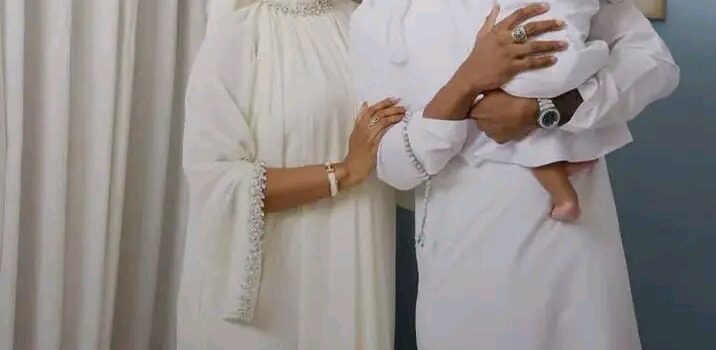
Nollywood star Iyabo Ojo has once again shown how much family means to her. The actress took to Instagram to celebrate her grandson, Rakeem, as he turned six months old.

Sharing adorable photos of the baby, the proud grandmother called him her “Oga Patapata” and poured out prayers for his future. She asked for God’s protection, provision, and guidance over his life.

In her words, she wrote and she said

“Happy 6th month, my princes, Ayomide and Rakeem Mkambala, @rakeem_mk, you will continue to grow in God’s likeness and image. His protection, provision, and guidance will never depart from you. Wisdom, knowledge, and understanding shall continually be yours as you grow up to be a brilliant, intelligent, and strong boy. I love you with all my heart, my Oga patapata!”

This is not the first time the actress has openly celebrated her grandson online. When Rakeem turned four months old, she shared a lovely photo of both of them wearing matching pyjamas. Just like now, she described him as her Oga Patapata and prayed for him.

Iyabo has also been very involved in her grandson’s milestones since birth. She hosted a grand baby shower in Nigeria and was later awarded Grandma of the Year for the celebration. To welcome the couple and her grandson home, she arranged for dancers and worshippers to receive them at her house.

When Rakeem was 40 days old, she posted photos from the celebration and thanked the public for their love and support. She also said prayers for her followers.

At one month old, the actress, who produced Labake Olododo, shared a sweet video. In it, she and her daughter were dressed in matching outfits as they danced with the baby.

Her daughter, Priscilla Ojo, also once wrote a heartfelt note to appreciate her mother. She thanked Iyabo for standing by her throughout her pregnancy. According to her, the actress left her business and work in Lagos to take care of her and her unborn child. She described her mum as the best grandma in the world.

Just days before the baby arrived, Iyabo had also prayed for her daughter and Juma Jux as they prepared to become parents.

From baby showers to monthly birthdays, the actress has continued to show her deep love and joy as a grandmother.

Iyabo Ojo’s six month birthday message to her grandson reflects her strong family bond and faith. As Rakeem continues to grow, fans can expect more loving moments and celebrations from the proud grandmother.